
Based on high-power RF technology products, we provide customers with professional system solutions
The 5G that rides the waves, and the EMC reefs lurking in the deep sea.
Release date:
2023-02-03
We live almost entirely surrounded by electromagnetic waves.
Thunder and lightning in the clouds emit electromagnetic waves, and the myriad mobile base stations and communication antennas scattered throughout cities are constantly radiating electromagnetic waves as well.
Everyday household appliances—such as mobile phones, microwave ovens, induction cookers, computers, televisions, car radios, and even electric blankets, hair dryers, rice cookers, and humidifiers—have made us fully immersed in a dense web of electromagnetic waves.
We live almost entirely surrounded by electromagnetic waves.
Thunder and lightning in the clouds emit electromagnetic waves, and the mobile base stations and communication antennas scattered throughout the city are also continuously radiating electromagnetic waves.
Everyday household appliances—such as mobile phones, microwave ovens, induction cookers, computers, televisions, car radios, and even electric blankets, hair dryers, rice cookers, and humidifiers—have made us increasingly immersed in a dense web of electromagnetic waves.
These electromagnetic waves vary in strength, frequency, distance, and range—far from being anything new.
The introduction of 5G’s high frequencies, the explosive growth in the number of IoT devices, and the enhanced functionalities of various smart hardware are all making the electromagnetic environment—once familiar to us—increasingly complex.
Against such a broad backdrop, designing products that still meet electromagnetic compatibility (EMC) certification requirements presents an extremely challenging task for hardware engineers.
Both internal stability and external defense are essential: the indispensable EMC.
First, it’s important to clarify that although there are many types of electromagnetic waves, not all of them necessarily pose a health risk.
Electromagnetic pollution only occurs when the intensity of electromagnetic fields reaches a certain level. For example, the issue of electromagnetic radiation from mobile phones—long-term monitored by many countries over the years—has in fact been shown not to pose any health risks to humans.
To maximize the safety of electromagnetic waves, EMC electromagnetic compatibility has become a routine consideration in industry.
Simply put, electronic devices must not only ensure the stable operation of the entire system in an electromagnetic environment—meaning they shouldn't shut down at the slightest interference—but also possess good “diplomatic skills,” avoiding excessive interference with other devices in the surrounding environment. For example, when charging your phone and using it at the same time, if the screen behaves erratically—jumping around or flipping pages randomly—that’s often due to electromagnetic interference caused by a low-quality charger.
To ensure that electronic devices in users’ homes can coexist peacefully, electromagnetic compatibility (EMC) has become a prerequisite for products to enter the market smoothly. Each industry also has its own corresponding EMC certification standards.
So, what new issues has the large-scale commercial deployment of 5G brought about?
Let’s try to sort things out by tracing the potentially changing “sources of interference.”
First, due to the higher frequency bands used by 5G networks, their coverage area is smaller than that of 3G/4G networks, necessitating the large-scale deployment of small base stations—and this in turn gives rise to electromagnetic compatibility challenges.
The newly emerged electromagnetic interference source, “microbase stations,” require a large number of electromagnetic shielding devices to achieve higher anti-interference performance, owing to the poor penetration and significant attenuation of millimeter waves.
Continuing forward, you’ll find that as 5G deployment and upgrades proceed, the number of connected devices and antennas in our daily lives is also increasing exponentially. Moreover, there’s a risk of interference among different frequencies and devices.
Smartphones have a test called “single-tone sensitivity,” which involves applying a strong interfering single-tone signal at a specific frequency interval from the channel and observing how much the phone’s sensitivity degrades. But what if electromagnetic waves were to interfere with a pacemaker, an artificial lung pump, a car’s operation, or even the brain-computer interfaces implanted in cyberpunk individuals?
Leaving aside these extreme scenarios, even if motor engineers manage to keep electromagnetic shielding within safe limits, the collective heat dissipation from an increasing number of electronic devices is still quite a challenge for the general public.
Electromagnetic wave radiation causes the body to heat up, and the resulting thermal effects—though currently not visibly harmful—have yet to yield a definitive answer from the scientific community regarding whether prolonged exposure could ultimately affect health. The advent of 5G naturally introduces yet another layer of uncertainty.
Between Attack and Defense: The 5G-Style Challenge of Electromagnetic Compatibility
Since the “attacking side” has played its card, the “defending side” naturally needs to have a countermove as well.
However, 5G has also rendered many old strategies ineffective.
Generally speaking, the way industry reduces electromagnetic interference is just like “fighting the COVID-19 pandemic”:
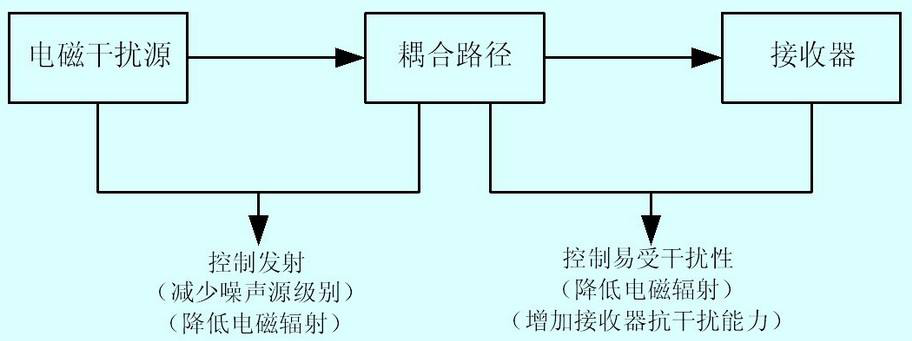
First, we rely on blocking transmission by cutting off the pathways to prevent potentially interfering electromagnetic waves from passing through—for example, the filtering method (adding reactors and EMI filters to reduce conducted interference at the circuit level), the shielding method (using shielded twisted-pair cables to suppress the radiation of electromagnetic waves), the grounding method (increasing the ground plane can effectively enhance the PCB’s electromagnetic compatibility), and the isolation method (keeping power lines separate from other low-voltage signal lines), and so forth.
Second, by strengthening the “physical robustness” of devices—incorporating more electromagnetic shielding and heat-conducting components into electronic equipment—we can address electromagnetic shielding and thermal management issues among products. For example, choosing chips with inherently low emissions whenever possible and avoiding high-power, high-loss components can help keep radiation levels within safe limits.
The dilemma of "anti-disturbance" in the 5G era lies in the sheer number of new technological challenges.
Challenge 1: Misalignment between the demand for post-debugging of electromagnetic interference and the need for product implementation.
In 5G networks, large-scale antenna arrays are required to ensure reliable transmission, which significantly increases the number of antenna elements and, consequently, the mutual interference among these elements. Traditional isolation methods, such as filtering, would result in an excessively large overall size of the communication system, making it impractical for real-world deployment.
The same challenges can also arise at the terminal end. For example, users have long been accustomed to slim and lightweight smartphones. As 5G phones strive to improve performance, frequency, signal strength, and other aspects, they must simultaneously manage to reduce—rather than increase—the size of components ranging from chips to RF devices. This poses new demands on both smartphone manufacturers and their supply chains.
Challenge 2: Misalignment between the development of the new electromagnetic environment and the industrial chain of supporting engineering sciences.
Clearly, the challenge of electromagnetic interference resistance is a collective test for the electronics industry. Beyond the self-improvement of hardware design manufacturers, supporting enterprises in materials, manufacturing, and other related fields must also keep pace. It’s worth pondering how to encourage these companies to actively cooperate with the upgrading of the industrial chain.
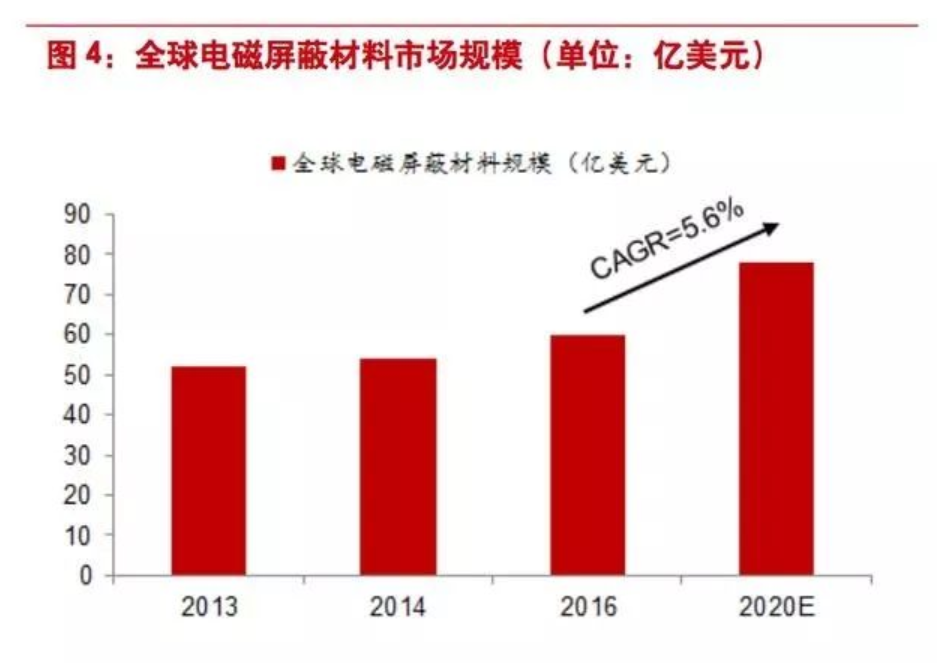
For example, since components of larger sizes cannot be used, 5G smartphones place higher demands on electromagnetic shielding and wave-absorbing materials as well as thermal management materials. Currently, thermally conductive graphite materials—widely adopted in the industry—are already driving a market size of nearly 10 billion RMB in the consumer electronics sector. As vehicle-to-everything (V2X), home networking, and even body-area networks gradually gain traction under 5G networks, the efficiency and performance of electromagnetic shielding in these conventional applications will also enter a period of rapid growth. According to BCC Research’s forecast, the global market for EMI/RFI shielding materials will reach 7.8 billion USD by 2021, while the market for interface thermal materials will reach 1.1 billion USD by 2020.
However, developing next-generation photonic crystals, superconducting materials, and other advanced technologies—by innovating at the fundamental level to update electromagnetic control methods—faces significant constraints in terms of R&D costs, experimental expenses, and commercialization efforts, all of which await the emergence of problem-solvers.
In addition to materials, the upgrade and transformation of contract manufacturers also require adjustments to accommodate the new electromagnetic environment. For example, full-duplex technology (CCFD) can support twice as many devices without increasing resource consumption, ensuring real-time performance and automatic control in WiFi transmissions. It is also regarded as one of the key technologies for 5G. However, this requires that transmitters and receivers in terminal devices such as mobile phones be able to operate simultaneously on the same frequency. Yet, under full-duplex mode, if the transmitted and received signals are not orthogonal, the interference generated by the transmitting end can be billions of times stronger than the useful signal received. To ensure that mobile phones do not suffer from self-interference when transmitting and receiving simultaneously, extremely high interference-canceling capabilities are needed to address both inter-base-station interference and inter-terminal interference. Currently, no viable solution has yet been found for this challenge.
Take, for example, the packaging of 5G chips. As the data rates of communication chips continue to rise, traditional packaging structures can exceed radiation limits at high frequencies. New approaches, such as integrated antenna packaging, are already under development.
Challenge 3: Misalignment between the new product development process and the conventional EMC design philosophy.
Even if upstream suppliers are fully prepared, what happens if the terminal hardware manufacturer fails to take overall EMC issues into account during the early stages of product development?
At the smaller end of the spectrum, problems during testing may require rework or redesign—time-consuming, labor-intensive, and costly. At the more serious end, failure to pass EMC certification could prevent your product from being launched smoothly or from entering the international market. In short, “tragic” is exactly the right word to describe it.

It’s often said that “preparation ensures success, while lack of preparation leads to failure.” So why can’t the all-important electromagnetic interference (EMI) resistance performance be planned for right from the start? Industry insiders have revealed that over 90% of electronic companies nationwide don’t have a formal EMC design and verification process in place.
On the one hand, influenced by the “take what’s useful” mindset, we’ve been technically combining supply-chain components that meet standards—but we haven’t put much thought into how to integrate electromagnetic compatibility into the product development process and establish standardized practices.
An even more important reason is that EMC design is a systems engineering endeavor. Whether it’s as small as individual chips, packages, or PCBs, or as large as external electromagnetic environments such as base stations, data centers, and smart cities, any oversight in even one aspect can potentially lead to poor electromagnetic compatibility of the product.
Issues such as how to design system shielding, how to implement filtering, and how to systematically address grounding—all these are fraught with大大小小 uncertainties, making EMC design a task that is highly “engineer-individualistic.” Different hardware designers’ product awareness, software operation skills, design tools, and understanding of EMC can all lead to different solutions.
For example, if the overall device’s radiation exceeds the standard, some people might modify the design of the device’s ventilation holes to increase airflow diversion; others might focus on optimizing the radiation sources from within. Although these two approaches take different paths, they ultimately achieve the same goal: enhancing the device’s EMC performance. Since it’s difficult to arrive at a “single optimal solution,” naturally everyone tends to adopt their own “philosophical” approach based on their individual perspectives.
But even more alarming than the “lack of awareness” is the reality of a lack of tools—specifically, the shortage of domestically developed EDA design tools.
As soon as the U.S. Entity List was released, everyone started equating “EDA tools” with “chip design.” In fact, simulation software—essential for EMC design—is also a type of EDA.
Its value should not be underestimated either. By using analog circuit EMC design to replace experiments—analyzing electromagnetic fields, component placement, wire modeling, shielding effectiveness, and more—it’s possible to significantly reduce the R&D cycle and costs of terminal hardware.
However, like chip EDA tools, today’s mainstream EMC simulation software is dominated by foreign vendors.
For example, products such as PCBMOd, CableMod, and RaidaSim, designed by the German software company Simlab; Ansoft High-Frequency and High-Speed Designers, developed by Ansoft Corporation; and SONNET High Frequency Electromagnetic Software, created by SONNET Software Company... and so on.
If these tools are banned as the global market competes with a focus on 5G, we don't know what kind of design and product risks this will bring to Chinese hardware manufacturers and consumers—but one thing is certain: it certainly won't be pleasant.
In the face of the powerful 5G wave, remaining vigilant about these hidden technological reefs lurking beneath the surface may well be a matter of life and death. We live almost entirely surrounded by electromagnetic waves.
Thunder and lightning in the clouds emit electromagnetic waves, and the mobile base stations and communication antennas scattered throughout the city are also continuously radiating electromagnetic waves.
Everyday household appliances—such as mobile phones, microwave ovens, induction cookers, computers, televisions, car radios, and even electric blankets, hair dryers, rice cookers, and humidifiers—have made us increasingly immersed in a dense web of electromagnetic waves.
These electromagnetic waves vary in strength, frequency, distance, and range—far from being anything new.
The introduction of 5G’s high frequencies, the explosive growth in the number of IoT devices, and the enhanced functionalities of various smart hardware are all making the electromagnetic environment—once familiar to us—increasingly complex.
Against such a broad backdrop, designing products that still meet electromagnetic compatibility (EMC) certification requirements presents an extremely challenging task for hardware engineers.
Both internal stability and external defense are essential: the indispensable EMC.
First, it’s important to clarify that although there are many types of electromagnetic waves, not all of them necessarily pose a health risk.
Electromagnetic pollution only occurs when the intensity of electromagnetic fields reaches a certain level. For example, the issue of electromagnetic radiation from mobile phones—long-term monitored by many countries over the years—has in fact been shown not to pose any health risks to humans.
To maximize the safety of electromagnetic waves, EMC electromagnetic compatibility has become a routine consideration in industry.
Simply put, electronic devices must not only ensure the stable operation of the entire system in an electromagnetic environment—meaning they shouldn't shut down at the slightest interference—but also possess good “diplomatic skills,” avoiding excessive interference with other devices in the surrounding environment. For example, when charging your phone and using it at the same time, if the screen behaves erratically—jumping around or flipping pages randomly—that’s often due to electromagnetic interference caused by a low-quality charger.
To ensure that electronic devices in users’ homes can coexist peacefully, electromagnetic compatibility (EMC) has become a prerequisite for products to enter the market smoothly. Each industry also has its own corresponding EMC certification standards.
So, what new issues has the large-scale commercial deployment of 5G brought about?
Let’s try to sort things out by tracing the potentially changing “sources of interference.”
First, due to the higher frequency bands used by 5G networks, their coverage area is smaller than that of 3G/4G networks, necessitating the large-scale deployment of small base stations—and this in turn gives rise to electromagnetic compatibility challenges.
The newly emerged electromagnetic interference source, “microbase stations,” require a large number of electromagnetic shielding devices to achieve higher anti-interference performance, owing to the poor penetration and significant attenuation of millimeter waves.
Continuing forward, you’ll find that as 5G deployment and upgrades proceed, the number of connected devices and antennas in our daily lives is also increasing exponentially. Moreover, there’s a risk of interference among different frequencies and devices.
Smartphones have a test called “single-tone sensitivity,” which involves applying a strong interfering single-tone signal at a specific frequency interval from the channel and observing how much the phone’s sensitivity degrades. But what if electromagnetic waves were to interfere with a pacemaker, an artificial lung pump, a car’s operation, or even the brain-computer interfaces implanted in cyberpunk individuals?
Leaving aside these extreme scenarios, even if motor engineers manage to keep electromagnetic shielding within safe limits, the collective heat dissipation from an increasing number of electronic devices is still quite a challenge for the general public.
Electromagnetic wave radiation causes the body to heat up, and the resulting thermal effects—though currently not visibly harmful—have yet to yield a definitive answer from the scientific community regarding whether prolonged exposure could ultimately affect health. The advent of 5G naturally introduces yet another layer of uncertainty.
Between Attack and Defense: The 5G-Style Challenge of Electromagnetic Compatibility
Since the “attacking side” has played its card, the “defending side” naturally needs to have a countermove as well.
However, 5G has also rendered many old strategies ineffective.
Generally speaking, the way industry reduces electromagnetic interference is just like “fighting the COVID-19 pandemic”:
First, we rely on blocking transmission by cutting off the pathways to prevent potentially interfering electromagnetic waves from passing through—for example, the filtering method (adding reactors and EMI filters to reduce conducted interference at the circuit level), the shielding method (using shielded twisted-pair cables to suppress the radiation of electromagnetic waves), the grounding method (increasing the ground plane can effectively enhance the PCB’s electromagnetic compatibility), and the isolation method (keeping power lines separate from other low-voltage signal lines), and so forth.
Second, by strengthening the “physical robustness” of devices—incorporating more electromagnetic shielding and heat-conducting components into electronic equipment—we can address electromagnetic shielding and thermal management issues among products. For example, choosing chips with inherently low emissions whenever possible and avoiding high-power, high-loss components can help keep radiation levels within safe limits.
The dilemma of "anti-disturbance" in the 5G era lies in the sheer number of new technological challenges.
Challenge 1: Misalignment between the demand for post-debugging of electromagnetic interference and the need for product implementation.
In 5G networks, large-scale antenna arrays are required to ensure reliable transmission, which significantly increases the number of antenna elements and, consequently, the mutual interference among these elements. Traditional isolation methods, such as filtering, would result in an excessively large overall size of the communication system, making it impractical for real-world deployment.
The same challenges can also arise at the terminal end. For example, users have long been accustomed to slim and lightweight smartphones. As 5G phones strive to improve performance, frequency, signal strength, and other aspects, they must simultaneously manage to reduce—rather than increase—the size of components ranging from chips to RF devices. This poses new demands on both smartphone manufacturers and their supply chains.
Challenge 2: Misalignment between the development of the new electromagnetic environment and the industrial chain of supporting engineering sciences.
Clearly, the challenge of electromagnetic interference resistance is a collective test for the electronics industry. Beyond the self-improvement of hardware design manufacturers, supporting enterprises in materials, manufacturing, and other related fields must also keep pace. It’s worth pondering how to encourage these companies to actively cooperate with the upgrading of the industrial chain.
For example, since components of larger sizes cannot be used, 5G smartphones place higher demands on electromagnetic shielding and wave-absorbing materials as well as thermal management materials. Currently, thermally conductive graphite materials—widely adopted in the industry—are already driving a market size of nearly 10 billion RMB in the consumer electronics sector. As vehicle-to-everything (V2X), home networking, and even body-area networks gradually gain traction under 5G networks, the efficiency and performance of electromagnetic shielding in these conventional applications will also enter a period of rapid growth. According to BCC Research’s forecast, the global market for EMI/RFI shielding materials will reach 7.8 billion USD by 2021, while the market for interface thermal materials will reach 1.1 billion USD by 2020.
However, developing next-generation photonic crystals, superconducting materials, and other advanced technologies—by innovating at the fundamental level to update electromagnetic control methods—faces significant constraints in terms of R&D costs, experimental expenses, and commercialization efforts, all of which await the emergence of problem-solvers.
In addition to materials, the upgrade and transformation of contract manufacturers also require adjustments to accommodate the new electromagnetic environment. For example, full-duplex technology (CCFD) can support twice as many devices without increasing resource consumption, ensuring real-time performance and automatic control in WiFi transmissions. It is also regarded as one of the key technologies for 5G. However, this requires that transmitters and receivers in terminal devices such as mobile phones be able to operate simultaneously on the same frequency. Yet, under full-duplex mode, if the transmitted and received signals are not orthogonal, the interference generated by the transmitting end can be billions of times stronger than the useful signal received. To ensure that mobile phones do not suffer from self-interference when transmitting and receiving simultaneously, extremely high interference-canceling capabilities are needed to address both inter-base-station interference and inter-terminal interference. Currently, no viable solution has yet been found for this challenge.
Take, for example, the packaging of 5G chips. As the data rates of communication chips continue to rise, traditional packaging structures can exceed radiation limits at high frequencies. New approaches, such as integrated antenna packaging, are already under development.
Challenge 3: Misalignment between the new product development process and the conventional EMC design philosophy.
Even if upstream suppliers are fully prepared, what happens if the terminal hardware manufacturer fails to take overall EMC issues into account during the early stages of product development?
At the smaller end of the spectrum, problems during testing may require rework or redesign—time-consuming, labor-intensive, and costly. At the more serious end, failure to pass EMC certification could prevent your product from being launched smoothly or from entering the international market. In short, “tragic” is exactly the right word to describe it.
It’s often said that “preparation ensures success, while lack of preparation leads to failure.” So why can’t the all-important electromagnetic interference (EMI) resistance performance be planned for right from the start? Industry insiders have revealed that over 90% of electronic companies nationwide don’t have a formal EMC design and verification process in place.
On the one hand, influenced by the “take what’s useful” mindset, we’ve been technically combining supply-chain components that meet standards—but we haven’t put much thought into how to integrate electromagnetic compatibility into the product development process and establish standardized practices.
An even more important reason is that EMC design is a systems engineering endeavor. Whether it’s as small as individual chips, packages, or PCBs, or as large as external electromagnetic environments such as base stations, data centers, and smart cities, any oversight in even one aspect can potentially lead to poor electromagnetic compatibility of the product.
Issues such as how to design system shielding, how to implement filtering, and how to systematically address grounding—all these are fraught with大大小小 uncertainties, making EMC design a task that is highly “engineer-individualistic.” Different hardware designers’ product awareness, software operation skills, design tools, and understanding of EMC can all lead to different solutions.
For example, if the overall device’s radiation exceeds the standard, some people might modify the design of the device’s ventilation holes to increase airflow diversion; others might focus on optimizing the radiation sources from within. Although these two approaches take different paths, they ultimately achieve the same goal: enhancing the device’s EMC performance. Since it’s difficult to arrive at a “single optimal solution,” naturally everyone tends to adopt their own “philosophical” approach based on their individual perspectives.
But even more alarming than the “lack of awareness” is the reality of a lack of tools—specifically, the shortage of domestically developed EDA design tools.
As soon as the U.S. Entity List was released, everyone started equating “EDA tools” with “chip design.” In fact, simulation software—essential for EMC design—is also a type of EDA.
Its value should not be underestimated either. By using analog circuit EMC design to replace experiments—analyzing electromagnetic fields, component placement, wire modeling, shielding effectiveness, and more—it’s possible to significantly reduce the R&D cycle and costs of terminal hardware.
However, like chip EDA tools, today’s mainstream EMC simulation software is dominated by foreign vendors.
For example, products such as PCBMOd, CableMod, and RaidaSim, designed by the German software company Simlab; Ansoft High-Frequency and High-Speed Designers, developed by Ansoft Corporation; and SONNET High Frequency Electromagnetic Software, created by SONNET Software Company... and so on.
If these tools are banned as the global market competes with a focus on 5G, we don't know what kind of design and product risks this will bring to Chinese hardware manufacturers and consumers—but one thing is certain: it certainly won't be pleasant.
In the face of the powerful 5G wave, remaining vigilant about these hidden underwater technological reefs may well be a matter of life and death.
Real-time News


Want to learn more about product details? Please leave us a message.
Contact us
Building 13, Jiangsu Software Park, Jiangning District, Nanjing City

WeChat QR code